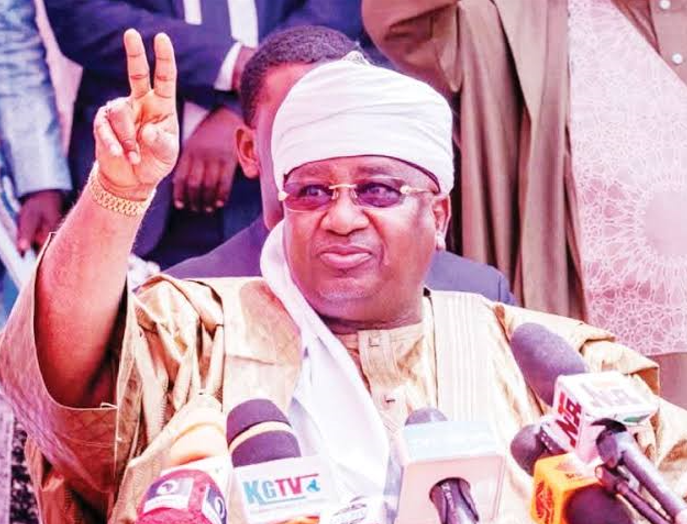
Power Minister Tegbe Pledges Stable Electricity for Nigerians Within Three to Five Years

Minister of Power Joseph Tegbe has assured Nigerians that the country will achieve more stable electricity supply within the next three to five years, enabling people to work in their homes and offices without fear of blackouts.
Tegbe made the projection on Monday, 9 November 2026, while speaking on a TVC television programme.
He said recent electricity supply disruptions in parts of the country, including Lagos and the Federal Capital Territory, had been resolved following the completion of planned maintenance at Egbin Power Station and other interventions.
“Honestly speaking, you already see some visible improvement despite the challenge we have had. By the time we fix the grid… I’ll look at the horizon of about three to five years from now,” Tegbe said.
He added: “I believe that Nigerians in the next three to five years should be able to work in their homes and walk into their offices without any fear of light out.”
The minister confirmed that electricity had been restored to several areas in Lagos, including Ajah, Lekki, Ikoyi, Magodo and Ikeja, as of Sunday night.
He appealed to Nigerians for patience, noting that infrastructure development takes time.
Tegbe disclosed that the Federal Government is planning a $2 billion east-west super grid to strengthen the national transmission network and expand capacity from about 4,000 megawatts to 19,000 megawatts.
The project, which would connect locations including Funtua, Gwagwalada, Ikot Ekpene, Benin, Epe and Ilorin, is expected to be completed within two years, with procurement already underway.
He also said the government is working towards greater private sector participation in electricity transmission within the next two to three years.
“So give me a time horizon of three to five years. Nigeria will enjoy stable life. And as demand improves, it will get better,” Tegbe stated.
The minister emphasised that growing demand from businesses, artificial intelligence applications and remote working made increased generation and transmission capacity essential.
By Ouinkansola Shittu.