Jonathan Warns of Post-Election Crisis Over Rising Political Intolerance
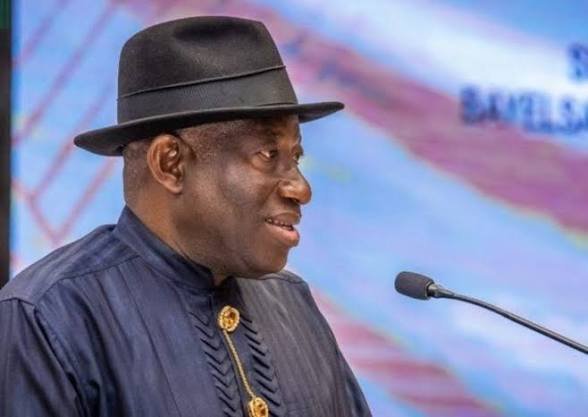
Former President Goodluck Jonathan has warned that rising political intolerance, thuggery and ethnic divisions could trigger a crisis after the 2027 general elections, urging political actors to respect democratic values and accommodate opposing views.
Jonathan, founder and chairman of the Goodluck Jonathan Foundation, spoke on Tuesday at a peace and security conference organised by the foundation in Abuja.
He said growing hostility among political actors, the use of young people to perpetrate violence and declining confidence in democratic institutions were raising concerns about the country’s political direction.
“As we gradually approach the 2027 general elections, certain developments in our political environment are becoming increasingly worrisome,” he said.
“Rather than the confidence and optimism we should be inspiring, there is growing apprehension about the likelihood of crises that may follow the elections. We must not ignore these concerns.”
Jonathan’s warning comes amid reports of attacks on political convoys and supporters in different parts of the country. Recent incidents include attacks on the campaign convoy of Nigeria Democratic Congress chieftain Rabiu Kwankwaso in Kano and the convoy of President Bola Tinubu in Abuja.
He also expressed concern over conflicting judicial pronouncements, particularly decisions by courts of coordinate jurisdiction, saying they could weaken public confidence in the judiciary and encourage citizens to resort to self-help.
“While the judiciary has the constitutional responsibility to interpret the law and adjudicate disputes, conflicting decisions on similar matters can undermine public confidence in the institution and create unnecessary tension. We must protect the integrity and independence of our judiciary,” he said.
The former President also cautioned against the use of ethnic sentiments in the coming elections, urging Nigerians to prioritise competence and national interest when choosing leaders.
He said Nigeria’s political recruitment process remained vulnerable to ethnic, religious and other considerations that could prevent competent candidates from emerging.
“Let us choose competence over prejudice, service over personal ambition, and national interest over narrow considerations. Our democracy must produce leaders capable of uniting our people and advancing our collective development,” he added.
Former Vice-President Namadi Sambo, who chaired the occasion, also urged political leaders to treat their differences as opportunities for constructive engagement rather than sources of division.
Sambo called for inclusive governance, responsible leadership and respect for the rule of law, saying national cohesion must take precedence over political affiliation and personal interests.
In his goodwill message, the Minister of Defence, Christopher Musa, warned against allowing political competition to fuel insecurity and national disunity.
Musa, represented by his Special Adviser on Strategic Communications, Mercy Bala, said political leaders and citizens must reject inflammatory language, hate speech, misinformation and narratives capable of deepening ethnic and religious divisions.
The Chairman of the Independent National Electoral Commission, Joash Amupitan, also condemned attacks on campaign convoys and party supporters, warning that those responsible for electoral violence would face prosecution.
Amupitan, represented by INEC National Commissioner May Agbamuche-Mbu, said the commission would work with security agencies to pursue the promoters and perpetrators of violent campaigns.
He cited Sections 96 and 97 of the Electoral Act 2026, which prohibit certain forms of abusive campaign language, the use of thugs and armed private security groups, and threats or use of force to influence political support.
The INEC chairman said the Act prescribed fines of up to N5m or 12 months’ imprisonment for individuals found guilty of specified campaign-related offences, while political parties could face fines of up to N10m.
In a related address, former President of the ECOWAS Commission, Omar Touray, said public trust in democratic institutions and electoral processes was essential to maintaining stable democracies.
He urged political parties to pursue electoral complaints through constitutional and legal channels, while calling on the judiciary to remain independent and security agencies to maintain political neutrality.
Executive Director of the Goodluck Jonathan Foundation, Ann Iyonu, also warned that insecurity, economic pressures and declining public confidence in institutions could heighten political tensions ahead of the elections.
Citing an Afrobarometer survey released in November, Iyonu said only 37 per cent of Nigerians expected the 2027 elections to be largely free and fair, while 48 per cent believed they would not be free and fair.
She said the survey also showed widespread concerns about vote buying, electoral violence, disregard for electoral laws and manipulation of results.
Iyonu warned that Nigeria’s ability to conduct peaceful and credible elections would have implications beyond its borders, given its influence on security and democratic stability in West Africa.
By Oluwafemi shodipe.