Fashola: Obi Should Have Corrected Supporters Over Former Anthem
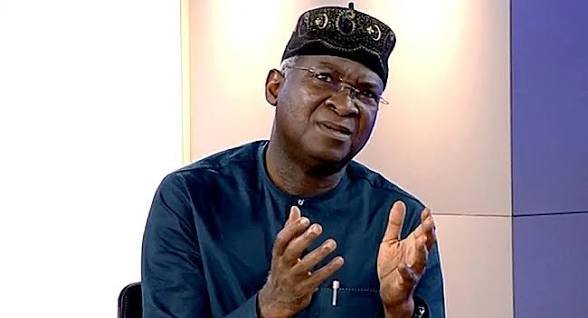
Former Lagos State Governor Babatunde Fashola has questioned the leadership capacity of Peter Obi, the presidential candidate of the Nigeria Democratic Congress (NDC), over the controversy surrounding the singing of Nigeria’s former national anthem at a party gathering in Lagos.
Fashola said leaders must be willing to correct their supporters when they engage in conduct they consider wrong, arguing that an aspiring leader who cannot exercise such authority may struggle to protect other citizens from their followers.
He made the remarks during an interview on Arise News on Tuesday while discussing the rendition of the former national anthem, “Arise, O Compatriots”, at an NDC town hall meeting attended by Obi in Lagos.
The former Minister of Works and Housing cited Section 24 of the 1999 Constitution, which outlines the duties of Nigerian citizens, including respect for the country’s national symbols.
Fashola said Nigerians often emphasised their constitutional rights while paying less attention to their responsibilities.
“Section 24 of our Constitution is one section I have been a champion of because it is the section that imposes duties on us. All of us always assert our rights, but very few people like to talk about that section,” he said.
He said the provision also addressed citizens’ obligations to declare their income, pay taxes and assist law enforcement agencies in fighting crime.
“That’s the section that says you must declare your income and pay tax. That is the section that says you must help law enforcement in crime fighting and provide support for them.
“That’s the section that says that you must respect the colours of Nigeria represented by the flag, its sovereignty, and respect the anthem and the values it espouses,” he added.
Fashola argued that leaders must be prepared to uphold moral standards even when doing so puts them at odds with their supporters.
He said, “Now, if I, a leader, if the responsibility of leadership is one that puts you in a lonely and uncomfortable place, but leaders must not surrender their authority to those who follow them, especially the authority about moral rectitude.”
To illustrate his argument, he recalled the 2008 United States presidential election, when then-Democratic candidate Barack Obama distanced himself from controversial remarks made by his pastor, Reverend Jeremiah Wright.
Fashola said Obama demonstrated leadership by making it clear that Wright’s views did not represent his position or campaign.
He recalled Obama’s response: “His views do not represent my position about this election. I am for everybody in this country.”
Describing the incident as a test of leadership, Fashola said, “That was a leadership test and it passed.”
He argued that an aspiring leader faced with a similar situation should openly condemn the actions of supporters rather than allow them to determine what was acceptable.
“Now, if, as a leader, your followers then decide that, okay, this is what they want to do, the least that you can do to pass that leadership test is to say, gentlemen, this is not right. I will not participate in this. We should not do this,” he said.
Fashola maintained that leaders earned public confidence by exercising their authority and correcting wrongdoing among their followers.
“That is where leaders earn their stripes, not surrender their authority,” he said.
He added that a leader’s inability to correct supporters could raise concerns about the protection of other citizens under such leadership.
“And for me, it then tells me, okay, if this leader can’t control his supporters, can he protect me from them? I leave the voters to make their choices,” he said.
The controversy followed an NDC town hall meeting in the Oregun area of Lagos on November 12, where Obi and the party’s Lagos State governorship candidate, Funso Doherty, attended an event that was disrupted by suspected political thugs.
Reports said the attackers invaded the venue with cutlasses, cudgels and stones, forcing some participants to flee before security personnel restored order.
During the event, the anchor invited attendees to observe the current national anthem, “Nigeria, We Hail Thee”. Obi, Doherty and some supporters did not join in its rendition, after which the anchor switched to the former anthem, “Arise, O Compatriots”.
Obi was seen facing the crowd with both hands raised in the NDC’s party symbol as the former anthem was sung.
The incident attracted criticism from FCT Minister Nyesom Wike, who accused Obi of disrespecting Nigeria’s national symbols and questioned his commitment to national unity.
Minister of Aviation and Aerospace Development Festus Keyamo also criticised the development, describing it as an indication of possible secessionist tendencies. He gave the NDC’s national leader, Seriake Dickson, 48 hours to clarify the party’s position on the former anthem.
The NDC dismissed the allegations, describing the rendition as a spontaneous reaction by supporters rather than a planned action by its leadership. The party also said the current national anthem was eventually sung at the gathering.
Nigeria adopted “Nigeria, We Hail Thee” as its national anthem at independence in 1960 before replacing it with “Arise, O Compatriots” in 1978.
President Bola Tinubu signed the National Anthem Bill into law on May 29, 2024, restoring the original anthem after 46 years.
By Oluwafemi Shodipe.