

Europe Hits Back at Trump’s Tariff Threat Over Greenland
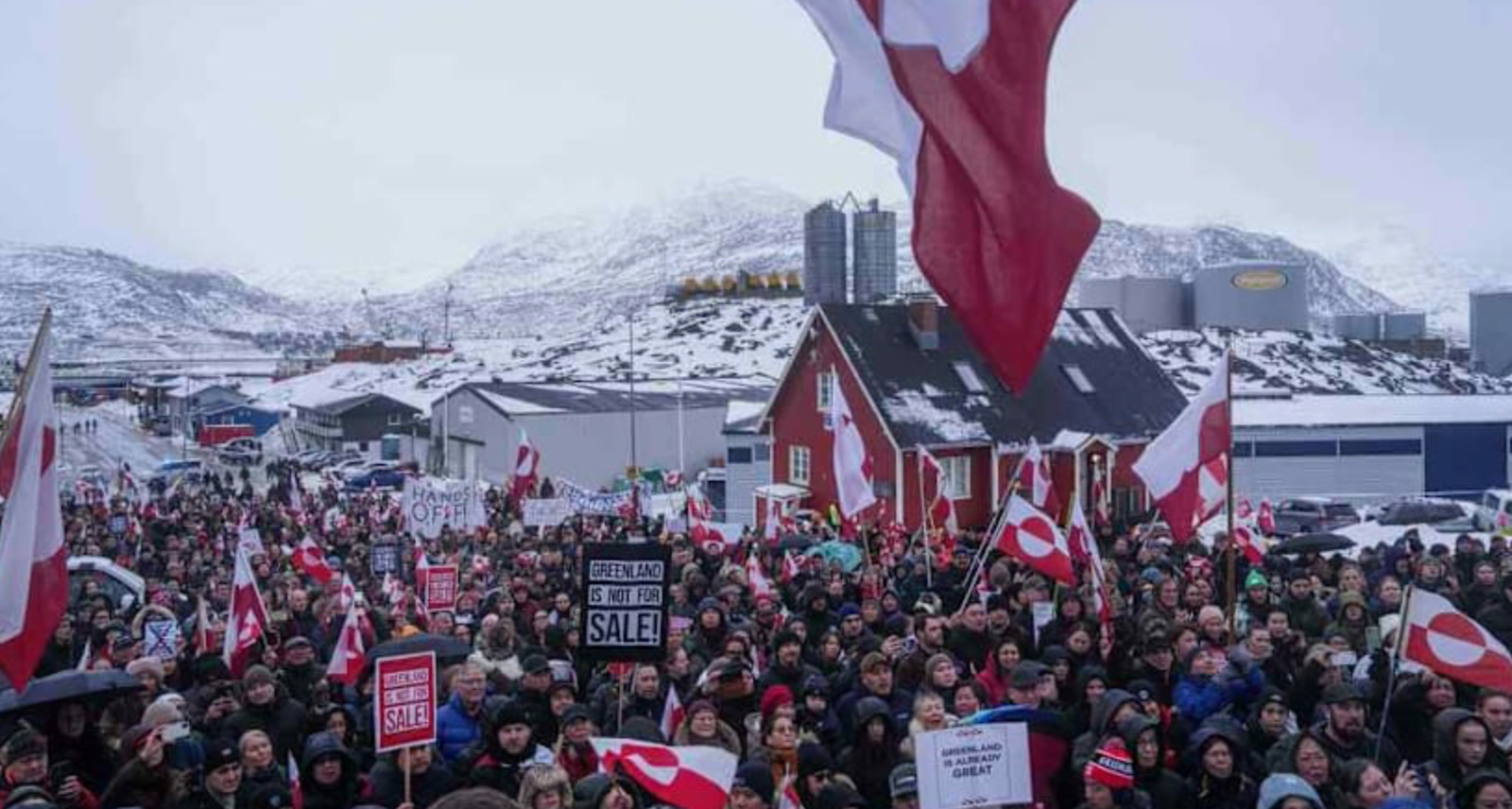
European leaders issued strong criticisms and coordinated responses after U.S. President Donald Trump
announced plans to impose tariffs on several European countries over their opposition to his bid to
acquire Greenland.
Trump’s announcement last weekend on his social media platform detailed plans to impose a 10
percent tariff on goods from Denmark, Norway, Sweden, France, Germany, the United Kingdom, the
Netherlands and Finland, beginning February 1, 2026, with the rate scheduled to rise to 25 percent on
June 1 if no agreement is reached on Greenland. The tariffs were framed by the U.S. president as
leverage in discussions over the Arctic territory.
European governments responded with unusually blunt language describing Trump’s tariff threats as
unacceptable and damaging to transatlantic relations.
French President Emmanuel Macron said that “no amount of intimidation or threat will influence us” in
matters such as Greenland or Ukraine and affirmed that European nations would respond in a
coordinated manner if the tariffs were implemented.
European Commission President Ursula von der Leyen and European Council President Antonio Costa
issued a joint statement declaring that Trump’s tariff threat would undermine transatlantic relations and
risk a dangerous downward spiral, and reiterated solidarity with Denmark and the people of Greenland
in defending sovereignty and territorial integrity.
Leaders in individual European capitals also spoke out. UK Prime Minister Keir Starmer described the
plan as completely wrong and reaffirmed that Greenland’s future should be determined by
Greenlanders and Denmark.
Sweden’s Prime Minister Ulf Kristersson rejected the proposed tariffs as blackmail, while Finland’s Prime
Minister Petteri Orpo said tariffs would be harmful to both Europe and the United States.
In addition to diplomatic pushback, European capitals are considering retaliatory measures. Major EU
states have discussed activating the Anti-Coercion Instrument, a tool that could impose economic
countermeasures against the U.S., including retaliatory tariffs or restrictions on American companies’
access to the European market.
Discussions have also covered a previously prepared tariff list affecting up to €93 billion worth of U.S.
goods, which was drawn up over earlier trade disputes but suspended following a trade agreement
signed last year.
The dispute has intensified months of tension between Washington and its European allies and posed
challenges for cooperation on broader security and economic issues, including NATO engagement in the
Arctic and ongoing negotiations at the World Economic Forum in Davos later this week.
European leaders have stressed that their response will be coordinated, grounded in international law
and aimed at preserving the long-standing partnership across the Atlantic, even as they warn that trade
retaliation could escalate if the tariff threats are enacted.
By Oyinkansola Shittu.

**boostaro**
Boostaro is a purpose-built wellness formula created for men who want to strengthen vitality, confidence, and everyday performance.
**back biome official**
Mitolyn is a carefully developed, plant-based formula created to help support metabolic efficiency and encourage healthy, lasting weight management.
Looking to get into Brabet? Brabetentrar made it super easy to sign up. No complaints here. Give it a shot yourself: brabetentrar
1cassinobet caught my eye. A bit flashy maybe, but it works. Not bad for a quick gamble. Jump in here: 1cassinobet
Alright, the name made me chuckle! Haha777phlogin login was smooth. Good for a quick session. Check it out for yourself: hahaha777phlogin
I clicked in expecting a quick skim and ended up reading every word with full attention. Your honesty about the ups and the downs made the whole thing feel trustworthy and real. It sparked an idea I have been circling for weeks and finally gave me the nerve to chase it. Keep leaning into your own voice because it is exactly what makes this blog worth following. May your ideas keep flowing freely and may your readership keep growing right beside you.
You found a way to stay both practical and inspiring and holding that balance is a skill I genuinely look up to. You stayed genuinely encouraging without ever drifting into empty hype and that honest balance is remarkably rare. I am saving this to reread on the harder days when I need a reminder that patient and steady effort really does pay off.
I truly value writers who respect my time and you honored mine by making every single paragraph pull its full weight. The calm confidence in your writing convinced me that the road you describe is one that a person like me could walk. Never doubt how far your words carry because this single post has already lifted at least one grateful stranger today.
This reached me in a way I honestly did not anticipate and I keep returning to a few lines just to sit with them. You never leaned on hollow buzzwords and that plain grounded voice is exactly why I believe every word you set down. Keep turning up day after day because that quiet consistency is exactly how ordinary effort blossoms into greatness.
The sincerity running all through this piece is exactly the sort of thing that keeps my faith in honest writing alive. The calm confidence in your writing convinced me that the road you describe is one that a person like me could walk. Thank you for pouring so much of yourself into this and please know I will be eagerly awaiting whatever you publish next.
This touched me in a way I honestly did not foresee and I keep drifting back to a few lines just to feel them again. I respect that you let your readers work it out for themselves rather than handing over every last conclusion neatly. Thank you for putting so much of yourself into this and please know I will be waiting eagerly for whatever comes next.
The perspective you brought here reframed something I assumed I understood and turned it fresh and worth chasing again. I love how you rooted each big claim in something real so nothing here ever floated off into hollow abstraction. Never doubt how far your words travel because this single post has already lifted at least one grateful stranger today.
You took a subject that could have gone flat and breathed such life into it that I never once wanted it to end. The attention you paid to even the tiniest details shows me how much respect you carry for the craft of writing itself. May your creativity keep pouring out freely because readers like me depend on writers like you to stay brave and hopeful.
this is a distinctive-content
Would love to incessantly get updated outstanding site! .
I have recently started a web site, the information you offer on this site has helped me greatly. Thanks for all of your time & work.
Hi my friend! I want to say that this article is awesome, nice written and include approximately all important infos. I’d like to see extra posts like this .
Your exotic pet care advice is always so helpful, but please tell your readers to avoid the link posted below, because it is a malicious phishing link pretending to be a specialized vet service that actually steals your personal payment info.