
Nasarawa Unveils Mobile Toilets in Bid to End Open Defecation
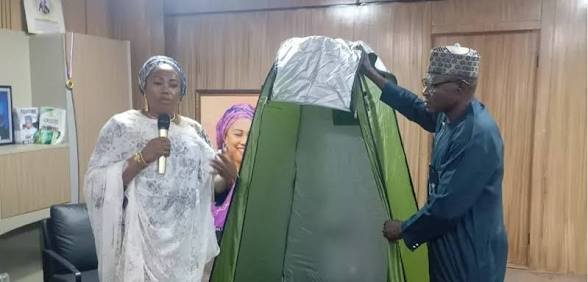
The Nasarawa State Government has unveiled mobile toilets for distribution across its 13 local government areas as part of efforts to tackle open defecation.
The government also declared zero tolerance for the practice, describing it as both an embarrassment and a serious public health concern.
The Commissioner for Environment, Solid Minerals and Mining, Margaret Elayo, disclosed this on Thursday during a media briefing ahead of the 2026 World Toilet Day, scheduled for November 19.
Elayo said sanitation remained a priority under the administration of Governor Abdullahi Sule, adding that the government was working with local councils, traditional rulers and community leaders to make more communities open defecation-free.
She noted that more than 3.5 billion people globally still lacked access to safely managed sanitation facilities.
The commissioner said open defecation in Nigeria contributed to preventable waterborne diseases, including cholera, typhoid and diarrhoea, which continue to claim lives, particularly among children.
She outlined the government’s plans to promote access to safe public toilets in markets, motor parks, schools and health centres, with facilities designed to accommodate women, children and persons with disabilities.
Elayo also appealed to community leaders to enforce sanitation guidelines in their areas and urged schools and teachers to prioritise hygiene education and proper toilet maintenance.
Describing the importance of access to sanitation, she said the absence of toilets exposed people, particularly women and schoolchildren, to health and safety risks.
“A toilet is life. A toilet is dignity. A toilet is health. A toilet is safety,” she said.
As part of the initiative, the commissioner unveiled a mobile toilet and recycling materials, saying similar facilities would be provided in schools and other public places across the state.
She said the intervention would particularly address the sanitation challenges faced by female students.
“I don’t want any girl child to be exposed to the public because there are no good toilets, and that is why I came up with this concept,” she said.
According to the United Nations Children’s Fund, more than 100,000 children under five die annually from diarrhoea in Nigeria, with 90 per cent of the deaths attributed to unsafe water and sanitation.
UNICEF also reported that one in four Nigerian children under five experiences severe stunting, while one in 10 is wasted, partly due to recurrent diarrhoea and other water, sanitation and hygiene-related diseases.
By Oluwafemi Shodipe.