Nigeria’s Inflation Rate Now 15%, First Increase in Eight Months
Nigeria’s headline inflation rate rose to 15.15 percent in December 2025, marking the first uptick in
eight months after a period of steady moderation, the National Bureau of Statistics (NBS) reported in its
latest Consumer Price Index (CPI) release on Thursday.
According to the NBS report, the CPI index rose to 131.2 points in December 2025, up 0.7 points from
130.5 in November, resulting in the 15.15 percent year-on-year inflation rate, a reversal from the
slowdown recorded over much of 2025.
The December figure came after a rebasing of the CPI methodology, under which the statistical agency
adopted a new base year (2024) and a 12-month reference period for calculating inflation.
This methodological shift, officials say, provides a more accurate reflection of price levels by avoiding
distortions that can occur when a single month from the previous year is used as the sole reference.
While the year-on-year headline rate rose compared with recent months, it remains significantly lower
than the 34.80 percent recorded in December 2024 under the previous CPI framework. This reflects a
broader moderation trend in inflation that has been in place for most of 2025.
On a month-on-month basis, the CPI recorded a 0.54 percent increase in December 2025, lower than
the 1.22 percent recorded in November 2025, signalling that short-term price pressures eased toward
the end of the year.
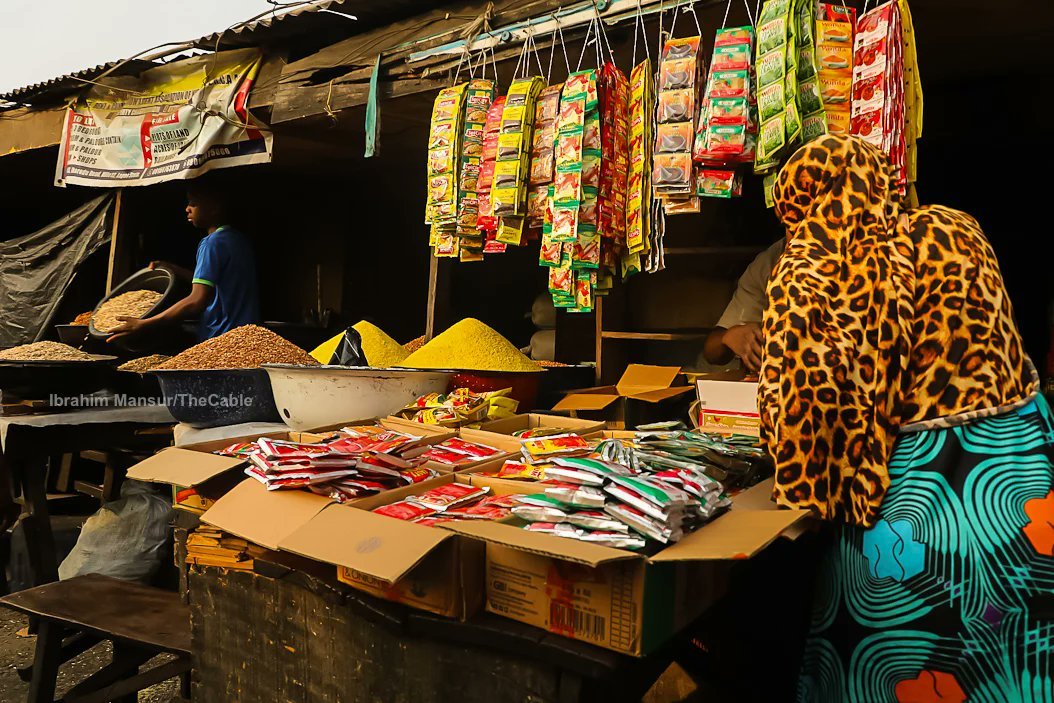
Food and non-alcoholic beverages continued to be the largest contributors to headline inflation, though
food prices eased compared to their levels in late 2024.
The NBS noted that average prices of several staple food items, including garri, eggs, vegetables and
grains, declined during the month, helping to temper overall inflationary pressure.
The NBS also reported that core inflation, which excludes volatile agricultural produce and energy
prices, stood at 18.63 percent year-on-year in December, with urban inflation at 14.85 percent and rural
inflation at 14.56 percent in the same period.
Regional variation in price changes was evident, with states such as Abia, Ogun and Katsina recording
some of the highest year-on-year headline inflation rates, while Sokoto, Plateau and Kaduna posted
lower relative increases.
Economists say the slight increase in headline inflation in December, after months of
deceleration,reflects technical adjustments from the CPI rebasing and evolving price patterns
nationwide rather than a dramatic deterioration in living costs.
However, the development will likely be closely watched by policymakers and markets as inflation
dynamics evolve in early 2026.
By Oyinkansola Shittu.